Genuine Parts Co. Confirms Q1 2027 Split of Automotive and Industrial Businesses, Navigating Complex Separation and Market Dynamics

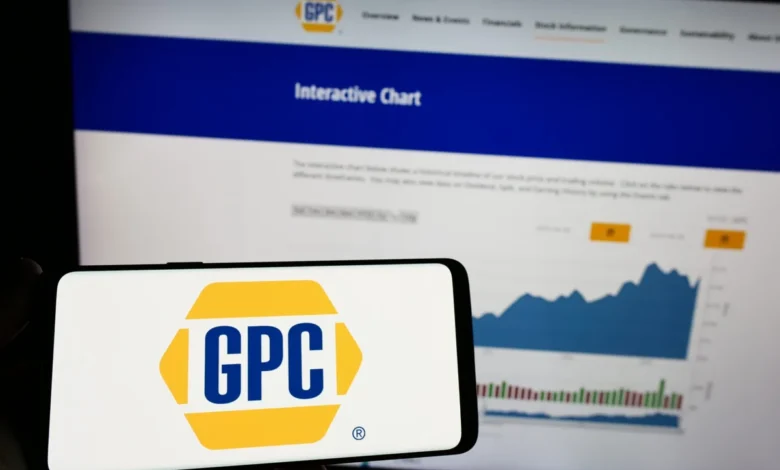
Genuine Parts Co. (GPC), the Atlanta-based distribution giant and parent company of NAPA Auto Parts and industrial distributor Motion, is steadfast in its plan to separate its automotive and industrial segments into two distinct, publicly traded entities by the first quarter of 2027. This strategic maneuver, a significant undertaking for the diversified enterprise, signals a countdown for its extensive network of B2B customers and a pivotal moment for the company’s future trajectory. The confirmation came during its second-quarter earnings report, where GPC reaffirmed its commitment to the split despite a slight trim to its full-year GAAP earnings outlook to account for the substantial transitional costs involved.
Strategic Rationale and Background
The decision to bifurcate a company of GPC’s scale and complexity is not made lightly; it is typically driven by a desire to unlock shareholder value, allow each business to pursue more focused growth strategies, and cater to distinct investor bases. For decades, Genuine Parts Co. has operated as a conglomerate, leveraging its robust distribution capabilities across both the fragmented automotive aftermarket and the specialized industrial maintenance, repair, and operations (MRO) sectors. Its automotive segment, primarily anchored by the iconic NAPA Auto Parts brand, serves a vast network of professional installers and DIY consumers, offering a comprehensive range of parts, accessories, and services. The industrial segment, spearheaded by Motion (formerly Motion Industries), provides industrial replacement parts and services, including bearings, power transmission equipment, fluid power components, and material handling solutions, to a diverse set of manufacturing, process, and institutional customers.
The company’s long-standing integrated structure, while offering diversification benefits, may have masked the true value and growth potential of each distinct operation. In recent years, a trend toward corporate simplification and specialization has gained momentum across various industries, with companies like General Electric and Johnson & Johnson pursuing similar spin-offs to create more agile and focused entities. For GPC, separating the businesses is anticipated to provide clearer investment theses for each, allowing investors to value them based on their respective industry dynamics, growth prospects, and financial profiles, potentially leading to a re-rating of the combined enterprise’s valuation.
Financial Performance and Market Context
In its Q2 earnings report, Genuine Parts Co. posted total sales of $6.5 billion for the quarter, representing a 6% increase from the prior year. This growth underscores the underlying strength of its operations even amidst the complexities of a planned corporate split. The company’s industrial segment, Motion, has been a particularly strong performer, with sales rising 7% for the quarter and an EBITDA margin improving by 30 basis points to 13.1%. This segment’s robust performance is further supported by positive macroeconomic indicators, with GPC reporting growth in 11 of the 14 industrial end markets it tracks. Moreover, the sector has seen six consecutive months of manufacturing Purchasing Managers’ Index (PMI) readings above 50, a critical threshold signaling expansion in the manufacturing sector. Such sustained growth in industrial activity directly translates to increased demand for MRO products and services, benefiting distributors like Motion.
The company’s significant presence in the digital commerce landscape is also notable. Genuine Parts Co. holds the No. 388 position in the prestigious Top 1000 Database, a market research tool that ranks North America’s largest online retailers by their annual e-commerce sales. This ranking highlights GPC’s established digital infrastructure and its ability to serve customers through online channels, a capability that will be crucial for both independent entities post-split. Furthermore, GPC is ranked No. 685 in Digital Commerce 360’s all-new AI Rankings, a testament to its investments and capabilities in leveraging artificial intelligence within its operations, from supply chain optimization to customer engagement. These digital competencies are expected to be amplified as each business gains more focused capital allocation and strategic direction.
The Mechanics of the Split: Timeline and Regulatory Steps
The journey towards two independent companies began earlier this year, with the strategic review and planning phases consuming much of the company’s executive attention. Chairman and CEO Will Stengel provided an update on the progress, stating that the standalone audit work necessary for the separation is now complete. The next critical step involves the confidential filing of a Form 10 with the U.S. Securities and Exchange Commission (SEC) later this summer. A Form 10 is a registration statement required for a class of securities to be traded on a national securities exchange, typically used in spin-off transactions to provide detailed information about the new entity to potential investors and the public. This filing will offer a comprehensive look into the financial health, governance, and operational details of the soon-to-be-independent businesses.
Further solidifying the timeline, GPC plans to host separate investor days for both future companies in early December in New York. These events will be crucial for articulating each business’s standalone strategy, financial profile, and capital structure to the investment community. Such investor days are designed to generate interest and provide transparency, helping analysts and portfolio managers understand the distinct value propositions of the new entities. The target completion of the split by the first quarter of 2027 implies a demanding schedule for legal, financial, and operational teams, encompassing everything from regulatory approvals to the intricate disentanglement of shared IT systems, logistics, and procurement processes.
Addressing recent market speculation regarding a potential deal involving the automotive business and a competitor, Stengel unequivocally stated that the company is "not currently in discussions with any competitor" and remains singularly focused on establishing two independent public companies. This clear denial aims to quell rumors and reinforce the company’s commitment to the spin-off strategy, ensuring that management’s attention is not diverted from the complex task at hand.
Operational Challenges and Cost Allocation
The financial and operational disentanglement of two large, intertwined businesses presents significant challenges and costs. Chief Financial Officer Bert Nappier provided new details on how these costs will be allocated between the two new entities. Of the approximately $360 million in projected corporate costs for 2025, a substantial portion—between $210 million and $230 million—will be assigned to the automotive business. This allocation includes roughly $20 million related to ongoing asbestos litigation, a legacy liability often associated with older industrial companies. In total, the automotive business is expected to absorb around $250 million in added costs, once dis-synergies, which represent the loss of cost efficiencies that arise from being part of a larger, integrated entity, are factored in.
The industrial business, Motion, is set to bear a comparatively lighter financial load, with an allocation of $50 million to $75 million in corporate costs and approximately $100 million in total added costs, including dis-synergies. An additional $50 million in financing fees associated with GPC’s accounts receivable program is currently under review, underscoring the granular complexity of dissecting the company’s financial architecture. These figures highlight the substantial financial investment required to transition from a single, diversified company to two distinct, self-sufficient public entities. Managing these costs effectively will be critical to preserving value during the separation process.
Implications for B2B Customers and Supply Chains
For B2B buyers, the timing and execution of this split are paramount. The transition period, stretching to Q1 2027, presents both potential disruptions and opportunities. Lance Owide, Vice President of B2B at Commerce (the parent company of BigCommerce, Feedonomics, and Makeswift), emphasized the complexity of untangling shared operational infrastructures. "Shared ERP, logistics, procurement, and credit operations all have to be untangled, and Q1 2027 is an aggressive clock for that," Owide noted. The sheer scale of integrating and then separating these critical back-office functions across a vast distribution network is immense.
Owide underscored that for industrial customers, continuity of service is not just a preference, but "the whole product." Any disruption to established processes could have cascading effects on their own operations. This includes maintaining seamless transitions for "contract pricing, rebates, credit terms, and system integrations – punchout, EDI, APIs – all have to be re-papered or re-platformed." The failure to execute these transitions flawlessly could lead to what Owide starkly described as "death by 1000 cuts for customers," implying a series of small but cumulative issues that erode trust and operational efficiency. B2B relationships are often built on long-term partnerships and stable operational interfaces; any perceived instability during this period could prompt customers to seek alternatives.
Competitive Landscape and Industry Dynamics
The competitive landscape in both the automotive aftermarket and industrial distribution is fierce. Competitors such as Grainger and Fastenal, both formidable players in industrial supply, will undoubtedly view GPC’s transition period as an "open season" to potentially capture market share. These rivals, already well-established with robust digital capabilities and extensive customer relationships, could leverage any perceived vulnerability or disruption experienced by Motion during its separation. Grainger, known for its extensive product catalog and sophisticated e-commerce platform, and Fastenal, with its vast network of on-site vending machines and strong local service, are strategically positioned to capitalize on such opportunities.
However, the spin-off also presents a significant upside: the creation of a more focused, more digital supplier. As Owide pointed out, a standalone industrial entity, potentially operating under the "Motion" brand (or a new identity), will be able to "invest its own capital in what B2B buyers now expect: digital self-service, real-time inventory visibility, and AI-driven procurement, instead of competing for capex with an automotive retail network." This is a critical advantage. In a rapidly evolving B2B e-commerce landscape, specialized focus allows for tailored technology investments, deeper industry expertise, and more agile responses to customer needs. The industrial sector, in particular, is undergoing a significant digital transformation, with customers increasingly demanding sophisticated online tools, predictive analytics for inventory management, and seamless integration with their own procurement systems. A dedicated industrial company, unburdened by the capital allocation demands of a separate automotive retail network, can accelerate these digital initiatives. Similarly, the automotive business, freed from the need to compete for capital with the industrial segment, can focus its investments on enhancing the NAPA experience, whether through expanded digital offerings, improved supply chain efficiency for auto parts, or innovations in service delivery.
Investor Perspective and Future Outlook
From an investor perspective, the split is largely viewed as a value-creating event. Conglomerate discounts often plague diversified companies, where the market fails to fully appreciate the sum of their parts. By separating, each business is expected to trade at a valuation more reflective of its pure-play peers, potentially leading to an uplift in the combined market capitalization. Analysts will closely monitor the investor days in December for detailed financial projections, growth strategies, and capital allocation plans for each new company. The ability of each entity to demonstrate a clear path to sustainable growth, coupled with efficient operational structures, will be key to attracting and retaining investor confidence.
The successful execution of this complex corporate restructuring will solidify Genuine Parts Co.’s legacy and set the stage for two new chapters in its storied history. While the road to Q1 2027 is fraught with operational challenges and competitive pressures, the strategic rationale for enhanced focus and potential value creation remains compelling. The ultimate success will hinge on GPC’s ability to navigate the intricate disentanglement process, minimize customer disruption, and empower each new company to thrive independently in its respective market. The B2B world, in particular, will be watching closely to see if the promise of more focused and digitally advanced suppliers outweighs the immediate complexities of the transition.